
English

> News > Company News > How to Choose the Right Mining Truck Tires for Heavy-Duty Operations
Company News
Mining truck tires operate in some of the harshest working environments in the world. Unlike standard commercial or highway tires, they must withstand extreme loads, abrasive surfaces, sharp rock impact, and continuous heavy-duty cycles. Choosing the right mining truck tires directly affects safety, productivity, and total operating cost in mining operations.
The first step in selecting mining truck tires is analyzing the operating conditions.
Mining sites typically involve unpaved roads, loose gravel, sharp rocks, steep gradients, and frequent loading cycles. In open-pit mining, trucks may travel long distances under full load, while in underground mining, maneuverability and heat resistance become more critical.
Each environment places different stress patterns on tires, so selection should always be based on real working conditions rather than general specifications.
Mining trucks carry extremely heavy loads, often at or near maximum rated capacity for long periods. Tire load rating is therefore one of the most critical selection factors.
Undersized or under-rated tires can lead to overheating, sidewall failure, or tread separation. Proper selection requires matching tire size, ply rating, and load index to the actual gross vehicle weight, including dynamic load conditions during operation.
In heavy-duty mining operations, it is common to select tires with reinforced carcass structures to handle continuous high load stress.
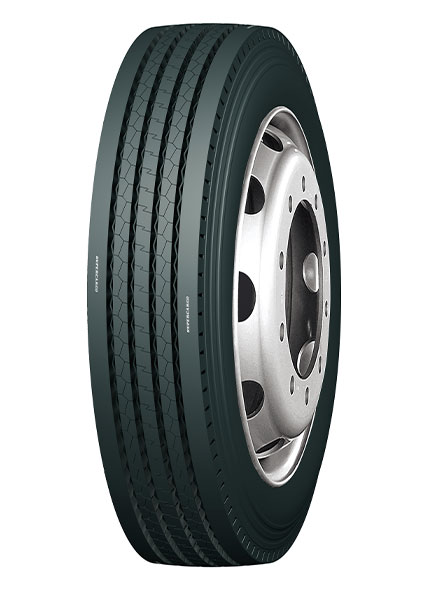
Tread pattern has a direct impact on traction, wear resistance, and stability.
In rocky environments, deep lug patterns are commonly used to improve grip and resist cutting damage. These designs help maintain traction on loose and uneven surfaces.
In mixed mining and haul road conditions, block-type or hybrid tread patterns provide a balance between durability and stability.
Tread design must also consider self-cleaning ability, as mud and debris buildup can reduce traction and increase slippage.
One of the biggest challenges in mining environments is tire damage caused by sharp rocks and debris.
High-quality mining tires use reinforced tread compounds and thicker rubber layers to resist cuts and punctures. Some designs also include special anti-cut compounds that improve resistance without sacrificing flexibility.
Casing strength is equally important, as it determines whether a tire can withstand repeated impacts without structural failure.
Heat buildup is a major cause of tire failure in mining operations.
Continuous heavy loads, long haul distances, and rough surfaces generate significant internal heat. If not properly managed, this can lead to tread separation or blowouts.
Mining truck tires must be designed with heat-resistant rubber compounds and strong internal structures that dissipate heat efficiently. Maintaining proper inflation pressure is also critical for controlling operating temperature.
Both radial and bias ply tires are used in mining applications, but they perform differently.
Radial tires offer better heat dissipation, longer tread life, and improved fuel efficiency. They are commonly used in long-haul mining operations with stable road conditions.
Bias ply tires provide stronger sidewall protection and better resistance to impact damage. They are often preferred in extremely harsh or uneven terrains.
The choice depends on whether durability, flexibility, or heat management is the top priority.
Proper tire pressure is essential for mining truck safety and performance.
Under-inflation increases heat buildup and accelerates wear, while over-inflation reduces traction and increases the risk of impact damage. In mining environments, pressure should be regularly monitored due to heavy load fluctuations and temperature changes.
Some operations use centralized tire inflation systems to maintain optimal pressure in real time.
The casing is the structural foundation of a mining tire.
A strong casing allows the tire to withstand multiple retreading cycles, which significantly reduces lifecycle cost. High-quality mining tires are designed for multiple retreads, making them more cost-efficient over long-term operations.
Casing durability is influenced by material quality, construction process, and operating conditions.
Mining tires are expensive, so lifecycle cost is a major consideration.
A tire that supports multiple retreads can significantly reduce total operating expenses. Retreadability depends on casing integrity and uniform wear patterns during operation.
Operators should evaluate not only initial cost but also total cost per ton-kilometer when selecting tires.
Different positions on mining trucks experience different stress levels.
Drive axle tires require strong traction and torque resistance. Steering axle tires focus on directional control and stability. Trailer or haul tires prioritize load support and wear resistance.
Correct positioning improves safety and extends tire life.
Choosing the right mining truck tires requires a detailed understanding of operating conditions, load demands, terrain characteristics, and thermal stress factors. In heavy-duty mining environments, tire performance directly affects productivity, safety, and operational cost.
A well-selected mining tire provides strong load capacity, excellent cut resistance, stable heat management, and long service life. When combined with proper maintenance and pressure control, it ensures reliable performance even in the most demanding mining operations.