
English

> News > Company News > Choosing Regional Tyres for Varying Road Surfaces: A Practical Guide
Company News
Regional tyres are designed for vehicles that operate within a defined geographic area rather than long-haul international routes. They typically face mixed driving conditions—urban roads, highways, rural routes, and sometimes uneven or poorly maintained surfaces. Because of this variability, selecting the right regional tyre is essential for safety, fuel efficiency, and long-term cost control.
Regional tyres are commercial vehicle tyres built for short to medium-distance transport within a specific region. They are commonly used on delivery trucks, buses, and distribution fleets that return to base frequently.
Unlike long-haul tyres, regional tyres must balance durability, traction, braking performance, and comfort across a wide variety of road conditions.
Different road surfaces place different demands on tyres. In regional transport, it is common to encounter multiple surfaces within a single route.
Urban roads usually involve frequent stopping, turning, and acceleration. This requires tyres with strong braking stability and good wear resistance.
Highways demand consistent speed performance, heat resistance, and low rolling resistance for fuel efficiency.
Rural or semi-developed roads may include gravel, potholes, and uneven terrain, requiring stronger sidewalls and better cut resistance.
Construction zones or industrial areas can expose tyres to sharp debris, increasing the need for puncture resistance.
Understanding the dominant road conditions in your operation area is the first step in tyre selection.
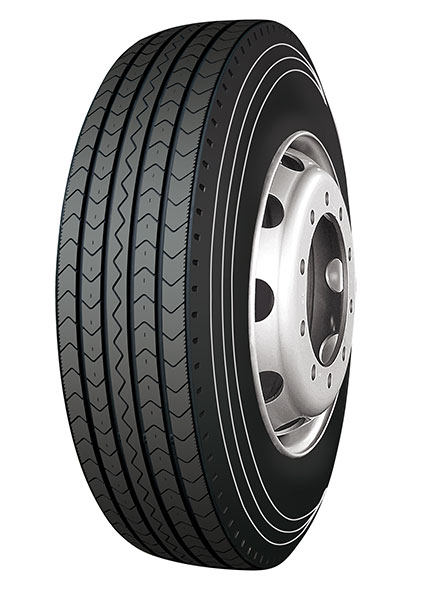
Tread design plays a major role in how a tyre performs on different surfaces.
Closed or rib-type tread patterns are ideal for highway-dominant routes. They offer lower rolling resistance, improved fuel efficiency, and stable straight-line driving.
Block or lug-type patterns perform better on rough or mixed surfaces. They provide stronger grip and better traction on loose or uneven roads.
Hybrid tread designs combine both features, making them suitable for mixed regional applications where road conditions vary frequently.
Regional vehicles often carry variable loads, from light deliveries to full cargo loads.
Tyres must be selected according to maximum axle load requirements, not just average usage. Overloading a tyre reduces lifespan, increases heat buildup, and raises the risk of failure.
Reinforced casing construction is important for vehicles that frequently carry heavy or uneven loads. Stronger carcass materials improve durability and reduce deformation over time.
In regional transport, vehicles often stop and start frequently, generating heat buildup in tyres.
Tyres with better heat dissipation properties reduce the risk of premature wear and structural damage. Low rolling resistance designs also help improve fuel economy, especially in urban delivery cycles.
Balancing heat resistance with grip performance is important for long-term efficiency.
Regional routes often experience changing weather conditions, making traction performance critical.
In wet conditions, deeper grooves and effective water evacuation channels reduce the risk of aquaplaning.
On dry roads, stable rubber compounds and optimized tread blocks improve braking distance and handling stability.
A well-balanced regional tyre should perform consistently in both conditions rather than being optimized for only one.
Sidewall durability is especially important for vehicles operating on uneven or damaged roads.
Strong sidewalls help absorb impacts from potholes, curbs, and debris. This reduces the risk of sidewall cuts, bulges, or sudden tyre failure.
Reinforced construction is highly recommended for mixed-surface regional applications where road quality is unpredictable.
Fuel consumption is a major cost factor in regional transport fleets.
Tyres with optimized rolling resistance reduce energy loss and improve mileage. While high-traction tyres may slightly increase fuel consumption, modern designs aim to balance efficiency with performance.
Selecting the right compound and tread design can significantly impact long-term operating costs.
For commercial operators, tyre lifecycle cost is often more important than initial purchase price.
High-quality regional tyres are designed for retreading, allowing multiple life cycles from a single casing. This reduces total cost per kilometer and improves sustainability.
Casing strength and uniform wear patterns are key factors in determining retread suitability.
Different axle positions require different tyre characteristics.
Steer axle tyres prioritize precision handling and water dispersion. Drive axle tyres focus on traction and torque transmission. Trailer axle tyres emphasize low rolling resistance and stability.
Using the correct tyre type for each position improves overall vehicle performance and safety.
Choosing regional tyres for varying road surfaces requires a careful balance of durability, traction, efficiency, and cost control. Since regional transport involves mixed driving environments, no single feature can be prioritized in isolation.
The best tyre choice depends on understanding road conditions, load requirements, and operational patterns. When properly selected, regional tyres can significantly improve safety, reduce fuel consumption, and extend service life across diverse transport routes.