
English

> News > Company News > Environmental Impact of Truck Tires: Causes, Effects, and Sustainable Solutions
Company News
For fleet managers, truck operators, and tire distributors, the environmental impact of truck tires goes far beyond discarded rubber. Every kilometer driven contributes to fuel consumption, carbon emissions, tire wear particles, and long-term waste. Understanding the truck tire environmental footprint helps businesses reduce operating costs while improving sustainability. This guide explains the main environmental risks, introduces practical measurement methods, and explores sustainable truck tire management strategies, including rolling resistance optimization, tire maintenance, and retreading.
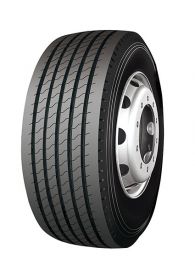
The environmental impact of truck tires refers to the effects associated with their entire life cycle, from raw material extraction and manufacturing to transportation, road use, maintenance, and final disposal. Unlike products that create most of their environmental burden during manufacturing, truck tires continue to affect the environment throughout their service life.
For heavy-duty transportation, tire-related environmental impacts generally fall into five categories:
Carbon emissions: Energy consumption during tire manufacturing and additional fuel consumption caused by rolling resistance.
Air pollution: Particulate matter generated by tire abrasion and the release of airborne tire-related compounds.
Water and soil pollution: Tire wear particles and chemical additives can enter surrounding ecosystems through road runoff.
Natural resource consumption: Natural rubber, synthetic rubber, steel, carbon black, and other materials are required for tire production.
Waste generation: Worn-out truck tires create substantial end-of-life waste when they cannot be reused, retreaded, or recycled.
These impacts are interconnected. A tire with a longer service life may reduce replacement frequency, while a tire with lower rolling resistance may reduce vehicle energy consumption. However, environmental performance must also account for wet grip, durability, load capacity, and safe operating conditions.
Truck tire production requires a combination of natural and industrial materials. These materials provide the strength, flexibility, heat resistance, and wear characteristics needed for commercial transportation.
Common materials include:
Natural Rubber: Provides elasticity, flexibility, and mechanical strength.
Synthetic Rubber: Different rubber polymers are used to achieve specific tread and casing properties.
Carbon Black and Silica: Reinforcing materials that influence abrasion resistance, durability, and rolling resistance.
Steel Cord: Used in all-steel radial truck tires to reinforce the belt and carcass structure.
Chemical Additives: Antioxidants, vulcanizing agents, and other compounds help protect rubber and control its physical properties.
Manufacturing also consumes electricity, heat, water, and other resources. Processes such as rubber mixing, component preparation, tire building, and vulcanization contribute to the product's overall carbon footprint.
For tire manufacturers, improving production efficiency, reducing material waste, controlling emissions, and increasing the use of responsibly sourced materials are important approaches to reducing manufacturing-related environmental impacts.
Rolling resistance is one of the most important connections between truck tire design and environmental performance. As a tire rotates under vehicle load, its rubber and internal structure deform continuously. Part of the energy used to deform the tire is converted into heat rather than contributing to forward movement.
This energy loss is known as rolling resistance. It increases the power required to move a vehicle and can therefore increase fuel consumption and carbon dioxide emissions.
The relationship can be expressed using the rolling resistance force formula:
Frr = Crr × Fz
Frr: Rolling resistance force.
Crr: Rolling resistance coefficient (RRC).
Fz: Vertical load acting on the tire.
For example, when the vertical load remains constant, reducing the rolling resistance coefficient reduces the force required to overcome tire deformation.
Research cited by the European Commission indicates that tire rolling resistance can influence up to one-third of energy use in diesel trucks and more than half in more energy-efficient electric trucks. These figures describe the influence of rolling resistance on vehicle energy consumption, not the guaranteed savings achievable by replacing tires.
For fleet operators, selecting truck tires with appropriate rolling resistance characteristics can help reduce fuel consumption over long operating distances. However, rolling resistance must be evaluated alongside wet grip, load capacity, tread wear, and other safety requirements.
Truck tires gradually lose tread material through friction and mechanical interaction with road surfaces. This process generates tire wear particles, which combine with road surface materials to form tire and road wear particles (TRWP).
These particles can enter the environment through several pathways:
Small particles become airborne during vehicle movement and road dust resuspension.
Larger particles accumulate along roadsides and surrounding soil.
Rainwater transports tire-related particles into drainage systems, rivers, and other aquatic environments.
European Commission Joint Research Centre research has reported that tire abrasion accounts for a substantial share of unintentionally released microplastics in the environment. It has also estimated that tire abrasion contributes to a notable proportion of particulate matter emissions from road transport.
These figures are broad estimates for tire abrasion and road transport, not emission factors specifically measured for heavy-duty trucks. Actual emissions vary with vehicle weight, tire construction, road characteristics, environmental conditions, and driving behavior.
For truck fleets, higher vehicle loads and repeated acceleration, braking, and cornering can influence tire deformation and abrasion. Choosing suitable tire specifications and maintaining correct operating conditions are therefore important parts of reducing tire-related particulate emissions.
Another environmental concern involves chemical substances used in tire manufacturing. One example is 6PPD, an antioxidant commonly used to protect tire rubber against ozone-related degradation and cracking.
When 6PPD reacts with atmospheric ozone, it forms a transformation product known as 6PPD-quinone (6PPD-Q). Tire wear can release particles containing tire-related chemicals, which may subsequently be transported into waterways by stormwater runoff.
Research published in the journal Science in 2021 identified 6PPD-quinone as a major cause of acute mortality in coho salmon exposed to contaminated urban runoff. Subsequent research by the US Geological Survey has also documented the presence of 6PPD-Q in stormwater and urban-affected waterways.
This issue demonstrates that tire-related environmental impacts are not limited to visible rubber particles. Chemical substances associated with tire wear can also affect aquatic ecosystems. Further research is still needed to understand their wider environmental and human health implications.
Heavy-duty truck tires contain substantial amounts of rubber, steel, and other materials. Once the tread becomes unsuitable for further service and the casing cannot be safely reused or retreaded, the tire enters the end-of-life management stage.
Improper disposal can create several environmental problems:
Landfill Pressure: Large volumes of discarded tires occupy valuable disposal space and can remain in the environment for extended periods.
Fire Risks: Stockpiled tires can create difficult-to-control fires that release smoke and hazardous pollutants.
Resource Loss: Discarding tires without recovering usable materials wastes rubber, steel, and manufacturing resources.
Secondary Pollution: Poorly managed tire stockpiles can collect rainwater and create additional environmental and public health concerns.
End-of-life tire recycling, material recovery, and retreading can reduce the amount of waste requiring disposal. The most appropriate method depends on casing condition, material quality, available processing technology, and local environmental regulations.
A life cycle assessment (LCA) evaluates the environmental impact of a product across multiple stages rather than focusing only on manufacturing or disposal. This approach is particularly useful for comparing truck tires because their operating phase can account for a substantial share of their total environmental footprint.
| Life Cycle Stage | Main Environmental Impact | Possible Improvement |
|---|---|---|
| Raw Material Production | Resource consumption, energy use, and industrial emissions | Responsible sourcing and material efficiency |
| Tire Manufacturing | Electricity consumption, vulcanization emissions, and production waste | Energy-efficient equipment and process optimization |
| Transportation | Fuel consumption and logistics-related carbon emissions | Optimized distribution and transportation planning |
| Vehicle Operation | Rolling resistance, fuel consumption, and tire wear particles | Appropriate tire selection and maintenance |
| Maintenance and Retreading | Additional material and energy consumption | Extend casing life where technically and economically suitable |
| End-of-Life Management | Waste accumulation and potential pollution | Retreading, recycling, and material recovery |
For commercial fleet operators, this comparison reveals why purchasing price alone is not a reliable indicator of environmental performance. A tire with a higher initial cost may deliver a better overall result if it provides lower rolling resistance, longer usable mileage, and suitable casing durability.
Reducing the environmental footprint of commercial truck tires requires a combination of product selection, maintenance, driver management, and responsible disposal. Fleet managers can follow the steps below to establish a measurable improvement program.
Before changing tire specifications, establish a baseline for current fleet performance.
Collect the following information:
Number of vehicles and tires in operation.
Tire size, model, tread pattern, and axle position.
Annual vehicle mileage and average payload.
Fuel consumption per 100 kilometers.
Tire replacement frequency and average service mileage.
Retreading frequency and casing rejection rates.
Tire-related maintenance and disposal costs.
Fleet management software, fuel monitoring systems, tire inspection records, and maintenance databases can help consolidate this information.
For more detailed environmental analysis, companies can use life cycle assessment software to estimate carbon emissions, energy consumption, and material requirements across the tire life cycle.
Rolling resistance should be an important consideration when purchasing tires for long-distance transportation. A lower rolling resistance coefficient can reduce the energy required to maintain vehicle movement, particularly in fleets with high annual mileage.
However, selecting tires based on rolling resistance alone is not advisable. Fleet managers should also compare:
Wet grip and braking performance.
Load index and speed rating.
Tread wear characteristics.
Heat dissipation under continuous operation.
Resistance to cuts, punctures, and irregular wear.
Suitability for highway, regional, urban, or mixed-service applications.
For example, a long-haul fleet operating mainly on highways may prioritize rolling resistance and mileage, while regional delivery vehicles may require a different balance of traction, braking, and wear resistance.
Incorrect inflation pressure affects tire deformation, heat generation, tread contact, and rolling resistance. Underinflated tires generally experience greater sidewall flexing and heat buildup, which can accelerate wear and increase energy consumption.
Overinflation can also create problems, including uneven tread wear and changes in contact pressure. Therefore, increasing tire pressure beyond the manufacturer's recommendations is not a suitable environmental improvement strategy.
Fleet managers should:
Check tire pressure using a calibrated pressure gauge.
Follow the manufacturer's recommended pressure for the actual axle load.
Inspect pressure when tires are cold whenever practical.
Use tire pressure monitoring systems (TPMS) where appropriate.
Record pressure deviations and investigate recurring air-loss problems.
Consistent inflation management helps maintain tire performance and can prevent premature replacement caused by avoidable operating problems.
Incorrect wheel alignment can cause tires to scrub against the road instead of rolling evenly. This creates unnecessary tread abrasion and may increase rolling resistance.
Regular maintenance should include:
Checking toe and camber settings according to vehicle specifications.
Inspecting suspension and steering components.
Checking dual-tire matching and inflation differences.
Monitoring uneven tread wear and localized damage.
Inspecting wheel bearings and other components that may affect rolling performance.
Correcting alignment problems early helps prevent excessive tire abrasion and extends the useful service life of commercial truck tires.
Driving behavior influences the mechanical forces acting on tire tread and casing. Rapid acceleration, harsh braking, excessive cornering speeds, and unnecessary high-speed operation can increase tire wear.
Research reviewed by the OECD suggests that driving style may account for approximately 30% of tire wear in a UK survey context. This should be treated as an indicative estimate rather than a universal reduction potential for every fleet.
Fleet managers can introduce practical driver training measures:
Encourage gradual acceleration instead of sudden power delivery.
Reduce unnecessary hard braking through better route awareness.
Maintain speeds appropriate to road and vehicle conditions.
Avoid overloading and excessive cornering forces.
Train drivers to identify tire damage and abnormal wear early.
Telematics systems can help monitor driving patterns and identify vehicles that require additional maintenance or driver training.
Retreading is one of the most established circular economy practices in commercial tire management. Instead of manufacturing an entirely new tire, the worn tread is removed from a suitable casing and replaced with new tread material.
The process can reduce the demand for new raw materials and extend the service life of the original casing.
US heavy-duty vehicle regulatory analysis has cited an illustrative material comparison: manufacturing a new medium- or heavy-duty truck tire requires approximately 325 pounds of rubber, while retreading the same type of tire requires approximately 24 pounds. Actual quantities vary by tire design and manufacturing process, but the comparison demonstrates the material-saving potential of retreading.
Before retreading, fleet operators should:
Inspect the casing for structural damage and separation.
Check for previous repairs and irregular wear.
Verify casing age and service history.
Use qualified retreading facilities and approved processes.
Confirm that the retreaded tire meets applicable safety and performance requirements.
Not every worn truck tire is suitable for retreading. Casing inspection and technical evaluation must come before any reuse decision.
When a truck tire reaches the end of its usable life, fleet operators should work with qualified waste management providers to ensure appropriate disposal and material recovery.
Common recovery methods include:
Rubber Crumb Production: Used tires are processed into smaller rubber particles for approved secondary applications.
Reclaimed Rubber: Processed rubber materials can be used in selected industrial rubber products.
Steel Recovery: Steel reinforcement can be separated and recovered for further processing.
Pyrolysis: Thermal decomposition in an oxygen-limited environment can produce recovered carbon-rich materials, oils, and gas, depending on process conditions.
Retreading should generally be considered before material recycling when the casing remains suitable for safe reuse. This helps retain more of the original tire's functional value rather than immediately reducing it to secondary materials.
Consider an illustrative regional transportation company operating 20 heavy-duty trucks. The fleet covers a combination of highway and regional delivery routes and experiences frequent tire replacements due to high annual mileage.
The fleet manager wants to reduce fuel consumption, control tire replacement costs, and improve waste management without compromising vehicle safety.
Instead of replacing every tire model immediately, the company establishes a structured evaluation process.
| Evaluation Area | Initial Investigation | Improvement Action |
|---|---|---|
| Fuel Consumption | Compare fuel consumption across vehicle groups | Evaluate tires with verified rolling resistance data |
| Tire Pressure | Identify recurring underinflation | Introduce scheduled pressure checks and TPMS |
| Tread Wear | Record uneven wear and replacement mileage | Improve alignment and maintenance procedures |
| Casing Condition | Determine why tires are rejected for retreading | Improve inspections and casing management |
| Waste Management | Record discarded tire quantities | Work with qualified recycling providers |
The company then compares performance over equivalent operating periods, accounting for route distance, payload, vehicle type, weather, and tire pressure. This prevents changes in operating conditions from being incorrectly attributed to tire improvements.
For example, if fuel consumption decreases after a tire replacement, the fleet should investigate whether the change resulted from rolling resistance, improved inflation pressure, reduced vehicle load, or a different driving pattern.
This type of controlled evaluation is more useful than relying on a general claim that one tire model is environmentally friendly. It allows fleet operators to identify measurable improvements and make purchasing decisions based on operating evidence.
Life cycle assessment provides a structured method for evaluating environmental impacts from raw material extraction to final disposal. Instead of comparing tires only by purchase price or tread depth, fleet operators can examine energy consumption, carbon emissions, resource use, and waste generation.
For meaningful comparisons, use consistent functional units such as environmental impact per vehicle-kilometer or per tonne-kilometer of freight transported. The comparison should also account for service mileage, payload, retreading, and actual operating conditions.
Reducing rolling resistance is beneficial for energy efficiency, but it should not come at the expense of braking safety. Tire design involves balancing rubber compound properties, tread geometry, casing deformation, and wet-road traction.
For fleet purchasing teams, comparing both rolling resistance and wet grip is essential when evaluating fuel-efficient truck tires.
Retreadability should be considered during the initial tire purchasing process rather than only when a tire reaches the end of its first service life.
Buyers should evaluate casing construction, manufacturer recommendations, operating conditions, and the availability of qualified retreading services. A tire with a casing that can be safely reused may provide additional material-efficiency benefits over its total service life.
Research into tire compounds, wear particles, and chemical additives continues to develop. Manufacturers are investigating alternative materials, improved abrasion performance, and ways to reduce the environmental effects of tire-related chemicals.
Regulatory developments are also increasing attention on tire wear emissions. For example, the European Union's Euro 7 framework introduces requirements addressing tire abrasion for relevant vehicle categories, with implementation details depending on the applicable vehicle and tire regulations.
For international distributors and fleet operators, keeping track of local tire labeling, product approval, environmental compliance, and end-of-life management requirements is an important part of sustainable procurement.
Yes. Tire abrasion produces small particles that combine with road materials to form tire and road wear particles (TRWP). These particles can accumulate in soil, become airborne, or enter waterways through stormwater runoff. Their environmental distribution depends on vehicle weight, road conditions, weather, and driving behavior.
They can help reduce fuel or electricity consumption by decreasing the energy required to overcome tire deformation. Lower energy consumption can reduce operational carbon emissions, depending on the vehicle's energy source. However, rolling resistance should be assessed alongside wet grip, tread life, and load capacity.
Retreading extends the useful life of a suitable tire casing and reduces the need for new rubber and other raw materials. It can also reduce the number of discarded tires. The actual environmental benefit depends on casing condition, retreading quality, manufacturing energy, and the performance of the finished tire.
Yes. Maintaining manufacturer-recommended inflation pressure helps control tire deformation, rolling resistance, heat buildup, and uneven wear. This can improve fuel efficiency and reduce premature tire replacement. Pressure must always be matched to the actual load and approved operating conditions.
6PPD-quinone is a chemical transformation product formed when the tire antioxidant 6PPD reacts with ozone. It can be released through tire wear and transported into waterways through stormwater runoff. Scientific research has identified acute toxicity risks to sensitive aquatic species, particularly coho salmon.
No. Electric trucks eliminate tailpipe emissions during operation, but they still produce tire wear particles and require tire manufacturing, maintenance, and end-of-life management. Vehicle weight, torque delivery, tire selection, and driving behavior can all influence tire wear. Their overall environmental performance should therefore be evaluated across the vehicle and tire life cycles.
Environmental performance should be an important consideration when selecting truck tires for commercial fleets, transportation companies, and tire distributors. The right product needs to meet technical requirements while supporting efficient operation over its service life.
When evaluating truck tire suppliers, buyers should pay attention to several factors:
Product Range: Availability of long-haul, regional, urban, and mixed-service truck tires.
Technical Performance: Rolling resistance, tread wear, load capacity, wet grip, and heat dissipation.
Product Quality: Manufacturing consistency, quality inspection, and relevant product certifications.
Service Life: Casing durability, maintenance requirements, and retreading suitability.
Environmental Information: Verifiable material information, production management practices, and available life cycle assessment data.
For CHAOYANG LONG MARCH TYRE CO., LTD., all-steel radial tire research, manufacturing, and product development are important parts of its business. The company offers truck and bus tire products across different specifications and tread patterns, serving various transportation and operating requirements.
Its product development and manufacturing capabilities provide a basis for discussing application-specific tire requirements with international buyers. When evaluating products for sustainability-focused fleet procurement, buyers should request model-specific technical information, including rolling resistance data where available, tread wear performance, load and speed ratings, and casing suitability for retreading.
The environmental impact of truck tires involves more than fuel consumption or discarded rubber. Tire manufacturing consumes natural resources and energy, rolling resistance affects vehicle efficiency, tire wear particles contribute to environmental pollution, and end-of-life tires require responsible management.
For transportation companies, the most practical approach is to combine suitable tire selection, correct inflation pressure, regular maintenance, efficient driving practices, and responsible retreading and recycling. These measures help address the truck tire environmental footprint while improving fleet operating efficiency.
Understanding how to reduce truck tire environmental impact also requires evaluating the complete tire life cycle rather than focusing on one performance indicator. By considering tire and road wear particles (TRWP), rolling resistance coefficient (RRC), and life cycle assessment (LCA), businesses can make more informed purchasing and fleet management decisions.
CHAOYANG LONG MARCH TYRE CO., LTD. is committed to the research, development, and manufacturing of truck and bus radial tires for different transportation applications. For distributors, fleet operators, and commercial tire buyers, selecting the appropriate tire specifications and establishing a long-term tire management strategy are practical steps toward more efficient and responsible transportation.