
English

> News > Company News > What Affects OTR Tyre Service Life? Key Factors Every Buyer Should Know
Company News
OTR (Off-The-Road) tyres are one of the most expensive and critical consumables in mining, construction, quarrying, and heavy earthmoving operations. For fleet owners and procurement managers, extending OTR tyre service life directly impacts operating costs, machine uptime, and overall project profitability.
Understanding what really affects OTR tyre lifespan allows buyers to make smarter purchasing decisions and operators to achieve the maximum return on investment (ROI) from every tyre.
The operating environment is the biggest determinant of OTR tyre service life.
Different applications place very different stresses on tyres:
Mining operations expose tyres to sharp rocks, heat, and heavy loads.
Quarry sites involve constant abrasion and uneven terrain.
Construction sites often require frequent turning and short haul cycles.
Port and industrial yards involve high surface friction and repetitive movements.
Rough, rocky, and high-temperature environments will naturally reduce tyre lifespan compared to flat and well-maintained surfaces.
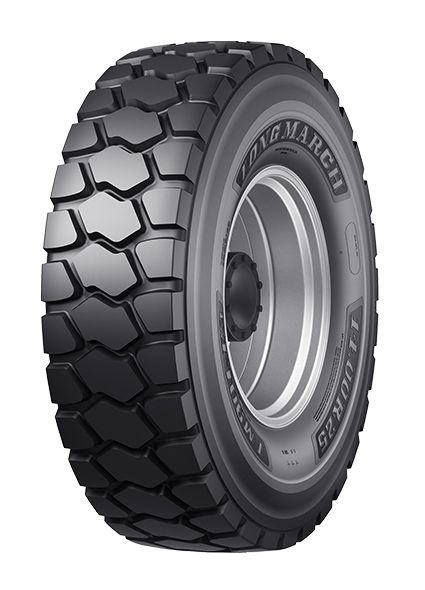
One of the most common reasons for premature OTR tyre failure is overloading.
When a tyre consistently carries more than its rated capacity:
Internal heat builds up faster.
Sidewalls experience excessive flexing.
Tread wear accelerates.
Structural fatigue increases.
Even a small amount of overload repeated daily can reduce OTR tyre service life by 30% or more.
Correct load matching between machine and tyre specification is essential.
Incorrect inflation pressure is a silent killer of OTR tyres.
Under-inflation causes:
Excessive heat buildup.
Increased sidewall flexing.
Shoulder wear and casing damage.
Over-inflation causes:
Reduced contact area.
Faster center tread wear.
Higher risk of impact damage.
Maintaining the right air pressure according to:
Load,
Speed,
Terrain,
is one of the simplest and most effective ways to extend tyre life.
The construction of the tyre plays a major role.
Radial OTR Tyres:
Better heat dissipation.
Lower rolling resistance.
Longer service life.
Higher initial cost.
Bias OTR Tyres:
Stronger sidewalls.
Better for harsh impact environments.
Shorter overall lifespan.
Choosing the wrong construction type for the application often leads to unnecessary wear or early failure.
Not all OTR tyres are designed for the same conditions.
Key factors include:
Rock-resistant compounds for mining.
Cut-resistant treads for quarry.
Smooth industrial treads for ports and yards.
Using a highway-style or general-purpose tread in aggressive terrain will dramatically shorten service life.
Matching tread design to real working conditions is critical.
How machines are operated has a massive impact on tyre longevity.
Common habits that reduce tyre life:
Sharp cornering at high speed.
Sudden braking.
Spinning wheels on loose surfaces.
Hitting obstacles aggressively.
Good operator training alone can increase OTR tyre lifespan by 10–20% without any additional investment.
Regular inspection prevents small issues from becoming major failures.
Key checks include:
Air pressure monitoring.
Tread depth measurement.
Sidewall cuts or cracks.
Embedded stones or debris.
Abnormal wear patterns.
Neglecting basic inspections often results in:
Unplanned downtime.
Irreversible casing damage.
Lost retreading opportunities.
Long haul cycles and poor road maintenance accelerate wear.
Key road factors:
Sharp stones.
Deep potholes.
Steep gradients.
High-speed haul roads.
Improving road surfaces and optimizing haul routes can significantly increase tyre service life with minimal capital cost.
9. Heat and Operating Temperature
Heat is the enemy of all rubber products.
Excessive heat causes:
Rubber aging.
Internal structure breakdown.
Reduced casing strength.
Heat increases with:
High loads.
High speeds.
Poor ventilation.
Under-inflation.
Once internal temperature exceeds design limits, tyre damage becomes permanent.
Not all OTR tyres are built the same.
High-quality tyres usually offer:
Stronger carcass structure.
Better rubber compounds.
More consistent quality control.
Longer retread potential.
Low-quality tyres may look similar but often fail earlier, leading to higher long-term cost despite lower purchase price.
Retreadable casings significantly extend total service life.
A good-quality OTR tyre can often be:
Used once as new.
Retreaded 1–2 times.
Deliver up to 2x total lifespan.
Poor casing quality makes retreading impossible, wasting future value.
Even before installation, improper storage can damage tyres.
Common storage mistakes:
Exposure to sunlight (UV damage).
Contact with oil or chemicals.
Long-term stacking under heavy weight.
High humidity environments.
Correct storage preserves rubber elasticity and structural integrity.
For procurement teams and fleet managers:
Select tyres based on real working conditions, not just price.
Ensure correct load and pressure matching.
Invest in operator training.
Implement regular inspection routines.
Improve road conditions where possible.
Choose suppliers with strong casing quality for retreading.
OTR tyre service life is not determined by a single factor. It is the combined result of:
Tyre quality + Application match + Load control + Inflation + Maintenance + Operator behavior
Buyers who treat tyres as a strategic asset instead of a consumable cost will consistently achieve:
Lower cost per hour.
Fewer failures.
Higher equipment availability.
Stronger long-term ROI.
In heavy-duty industries, maximizing OTR tyre lifespan is one of the most effective ways to improve overall operational efficiency.