English
> News > Company News > Understanding PCR, TBR, and OTR Tire Types Explained
Company News
PCR, TBR, and OTR tires serve different vehicles and working conditions. PCR tires are designed for passenger cars, TBR tires for commercial trucks and buses, and OTR tires for off-highway equipment used in mining, construction, and ports. Comparing tire construction, load and speed ratings, tread patterns, and duty cycles helps buyers select the right type for safe, cost-effective operation.
PCR stands for Passenger Car Radial tires. They are designed primarily for passenger vehicles, including sedans, hatchbacks, crossovers, and SUVs equipped with passenger-car tire specifications. Unlike commercial truck tires and off-the-road tires, PCR tires are developed mainly for paved-road driving, where handling, braking performance, ride comfort, and rolling resistance are important considerations.
Radial Construction: PCR tires use a radial carcass structure in which the body cords extend across the tire from bead to bead, approximately perpendicular to the tread centerline. Reinforcing belts beneath the tread help maintain tread stability, while the flexible sidewall supports ride comfort and steering response.
Low Rolling Resistance: Tire deformation during rotation creates rolling resistance and affects vehicle energy consumption. PCR tire manufacturers optimize rubber compounds, tread design, and internal construction to reduce energy loss without compromising essential grip and safety requirements.
Wet Grip and Handling: Circumferential grooves, lateral channels, tread blocks, and rubber compounds work together to evacuate water and maintain road contact. These design elements influence braking, cornering, and handling on wet and dry surfaces.
Noise and Ride Comfort: Tread pitch arrangements, block geometry, and sidewall flexibility help control road noise and vibration. These characteristics are particularly important for passenger vehicles used for daily commuting and long-distance travel.
Vehicle-Specific Specifications: PCR tires are available in different widths, aspect ratios, and rim diameters. Buyers should also check the load index and speed symbol to ensure that the selected tire meets the vehicle manufacturer's requirements.
A tire size marking contains several important technical parameters. For example, in the specification 245/45 R19 102Y:
245: Nominal section width in millimeters.
45: Aspect ratio, representing the sidewall height as a percentage of section width.
R: Radial construction.
19: Rim diameter in inches.
102: Load index.
Y: Speed symbol.
These markings help buyers identify the correct tire specification. The load index and speed symbol must be considered together with the approved tire size, inflation pressure, and vehicle application rather than being selected independently.
PCR tires are commonly used on passenger cars, sedans, hatchbacks, compact SUVs, and crossovers. Their design makes them suitable for urban commuting, highway transportation, and everyday road driving where predictable handling, braking performance, and driving comfort are required.
TBR stands for Truck and Bus Radial tires. These tires are engineered for commercial vehicles that operate under higher load conditions and accumulate substantial mileage, including heavy-duty trucks, buses, trailers, and freight transportation vehicles.
Compared with PCR tires, TBR tires require a more robust casing structure to withstand repeated loading, braking, acceleration, and long-distance operation. Many TBR models use steel-cord radial construction, including reinforced steel belts and, depending on the design, an all-steel carcass. The specific construction varies by tire model and intended service conditions.
Reinforced Radial Construction: Steel-cord reinforcement provides structural strength and supports the tire under demanding commercial operating conditions. Casing design, belt arrangement, and sidewall construction influence durability, heat resistance, and resistance to deformation.
High Load-Carrying Capacity: TBR tires are designed to carry the loads associated with commercial transportation. Their load capacity must be evaluated according to tire size, load index, inflation pressure, axle configuration, and operating speed.
Axle-Specific Tread Designs: Different commercial vehicle positions require different tread characteristics. Steer tires prioritize directional stability and handling, drive tires require traction for acceleration and braking, while trailer tires are designed to handle high loads, scrubbing forces, and long-distance wear.
Heat Management: Continuous highway operation, heavy loads, and high speeds generate heat inside a tire. Rubber compounds, casing structures, and tread designs are therefore developed to manage heat buildup under specified operating conditions.
Retreading Potential: Some commercial TBR tires are designed with casings that may be suitable for retreading. A reusable casing can help reduce tire replacement costs, but retreading suitability depends on casing construction, operating history, damage inspection, and manufacturer recommendations.
TBR tires are used across several commercial transportation segments. Their specifications and tread patterns should match the vehicle's route profile and axle position.
Long-Haul Transportation: Highway trucks covering long distances need tires designed for stable high-speed operation, controlled rolling resistance, and consistent tread wear.
Regional Transportation: Regional delivery vehicles experience more frequent acceleration, braking, and turning. Tire selection should balance traction, durability, and mileage.
Urban Transportation: City buses and delivery trucks operate with frequent stops, turns, and exposure to curbs. Tires must be suitable for repeated braking and urban road conditions.
Mixed-Service Transportation: Trucks operating on both paved highways and unpaved roads need tread and casing designs suited to changing surface conditions.
For fleet operators, selecting TBR tires according to axle position, route conditions, load requirements, and expected mileage helps improve tire utilization and manage the total cost of ownership.
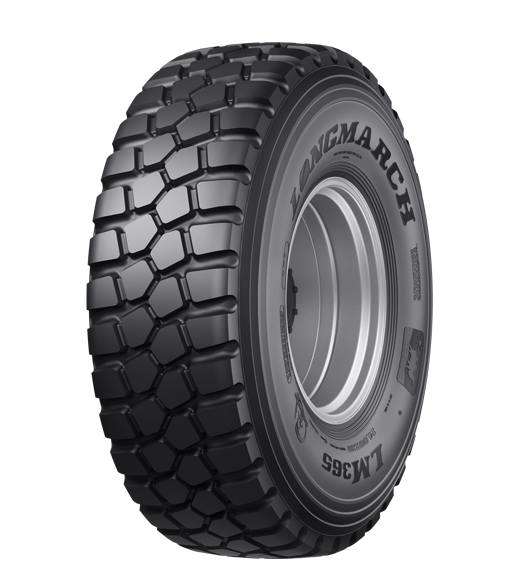
OTR stands for Off-The-Road tires. Unlike PCR and TBR tires, which are primarily designed for road transportation, OTR tires are developed for off-highway equipment operating in demanding environments such as mines, quarries, construction sites, and port terminals. OTR tires must withstand heavy loads, abrasive surfaces, sharp rocks, repeated impacts, and demanding working cycles.
Depending on the equipment and application, OTR tires are available in radial and bias constructions, with different tread patterns, compounds, and load ratings. Selecting the correct specification requires more than checking tire size or tread depth. Machine type, ground conditions, operating speed, payload, and working hours all influence tire performance.
Heavy-Duty Casing Construction: OTR tires are designed with reinforced carcasses and strong sidewall structures to withstand high loads and mechanical stress. Both radial and bias designs are available for different operating conditions.
Application-Specific Tread Patterns: OTR tread designs include traction, rock, block, and smooth patterns. Their geometry and tread depth are selected according to ground conditions, traction requirements, and exposure to cuts, chips, and abrasion.
High Load and Impact Resistance: Mining trucks, wheel loaders, and other heavy equipment place substantial loads on their tires. Appropriate casing strength and load ratings help manage deformation and mechanical stress during operation.
Heat Resistance: Continuous operation under heavy loads and at elevated speeds can increase internal tire temperature. OTR tire compounds and construction must therefore be matched to the thermal demands of the actual working cycle.
Radial and Bias Options: Radial OTR tires are often selected for applications where heat management, traction, and longer operating cycles are important. Bias tires can be suitable for certain impact-intensive, lower-speed applications. The better choice depends on the machine, terrain, and manufacturer's application recommendations.
OTR tire selection often involves identifying the machine category and matching the tread pattern to the working surface. The Tire and Rim Association (TRA) classification uses application codes to help identify different earthmoving tire categories.
C – Compactor: Designed for compactor rollers and soil compaction equipment, often using smooth or specialized tread patterns.
E – Earthmover: Used on earthmoving equipment, including dump trucks, transporters, and scrapers.
G – Grader: Designed for motor graders that require suitable traction and wear characteristics during road construction and maintenance.
L – Loader/Dozer: Used on wheel loaders and dozers that operate under high loading and repeated maneuvering conditions.
The number following the application letter helps identify the tread pattern and depth category. For example, E-3 generally refers to a standard rock tread for earthmoving applications, while E-4 indicates a deeper rock tread. L-3 and L-4 are common loader/dozer rock tread classifications.
These codes are useful when comparing OTR tire specifications, but buyers should always confirm the exact application and tread designation against the manufacturer's technical catalog.
For mining haul trucks, TKPH (Ton-Kilometer Per Hour) is an important technical parameter used to evaluate the thermal working capacity of an OTR tire. It considers the tire's average load and operating speed to assess whether the tire can operate within its safe temperature range.
If the actual operating TKPH at a mine site continuously exceeds the tire's rated TKPH, excessive heat can accumulate inside the casing. This may accelerate tire deterioration and increase the risk of premature failure.
Mining operators should therefore consider the following information when selecting haul truck tires:
Average loaded and empty vehicle weights.
Average operating speed and haul distance.
Haul road conditions and gradient.
Working hours and duty cycle.
Ambient temperature and tire maintenance conditions.
The manufacturer's rated TKPH for the selected tire model.
OTR tires are widely used on rigid dump trucks, articulated dump trucks, wheel loaders, motor graders, scrapers, underground mining vehicles, and port handling equipment. Each machine type has different requirements for load capacity, traction, flotation, tread resistance, and heat management.
Although PCR, TBR, and OTR tires are all designed to provide load support, traction, and vehicle stability, their construction and performance priorities differ according to their intended applications. The following comparison helps buyers identify the main differences.
| Comparison Factor | PCR Tires | TBR Tires | OTR Tires |
|---|---|---|---|
| Full Name | Passenger Car Radial | Truck and Bus Radial | Off-The-Road |
| Primary Vehicles | Passenger cars, sedans, hatchbacks, and some SUVs | Commercial trucks, buses, and trailers | Dump trucks, loaders, graders, and other off-highway equipment |
| Operating Environment | Urban roads and highways | Highways, regional routes, urban roads, and mixed-service routes | Mines, quarries, construction sites, and industrial yards |
| Construction | Radial carcass with application-specific reinforcement | Radial construction, commonly with steel-cord reinforcement | Radial or bias construction |
| Tread Design | Optimized for road grip, braking, comfort, and rolling resistance | Designed for steer, drive, or trailer axle requirements | Application-specific traction, rock, block, or smooth patterns |
| Load Requirements | Passenger vehicle load specifications | Heavy commercial vehicle and axle load requirements | High equipment loads and demanding working cycles |
| Key Performance Priorities | Handling, wet grip, ride comfort, and energy efficiency | Load capacity, mileage, traction, and casing durability | Traction, cut resistance, impact resistance, and heat management |
| Important Selection Parameters | Tire size, load index, speed symbol, and inflation pressure | Tire size, load index, speed symbol, axle position, and inflation pressure | Tire size, TRA code, load rating, star rating, and TKPH where applicable |
| Cost Evaluation | Purchase cost, fuel consumption, and service life | Cost per kilometer, mileage, and retreading potential | Cost per operating hour, tire life, and equipment productivity |
Choosing the right tire type starts with the vehicle or machine's technical requirements. A tire that fits physically may still be unsuitable for the actual load, speed, road surface, or working cycle. Buyers should evaluate the following factors before placing an order.
The first step is to identify the intended vehicle and its approved tire specifications. PCR tires are intended for passenger vehicles, TBR tires serve commercial trucks and buses, and OTR tires are designed for off-highway equipment.
Check the original equipment manufacturer's recommendations, including tire size, rim dimensions, load requirements, and approved construction. For commercial and industrial equipment, also confirm the tire's intended axle or machine position.
Road and ground conditions directly influence tread selection and tire durability.
Paved Roads: PCR tires need suitable road grip, wet braking, and rolling resistance characteristics. TBR tires should match highway, regional, or urban transportation requirements.
Mixed Roads: Commercial trucks operating between highways and construction access roads may require mixed-service tread designs with suitable traction and resistance to surface damage.
Rocky and Abrasive Ground: OTR tires used in mining and quarry operations require tread patterns and compounds matched to rock conditions, cutting risks, and impact exposure.
Soft or Uneven Ground: Tire flotation, traction, and ground pressure become important considerations when equipment operates on loose soil or other challenging surfaces.
A tire's load capacity cannot be evaluated independently of inflation pressure and operating speed. PCR and TBR buyers should check the load index, speed symbol, and manufacturer load-inflation recommendations.
For OTR applications, the selection process may also require checking the tire's star rating, load capacity, TRA classification, and TKPH rating. Mining operators should compare actual operating conditions with the manufacturer's published limits before selecting a tire.
Radial and bias constructions have different structural characteristics. Radial tires are commonly selected for applications that require tread stability and heat management, while bias tires can be suitable for certain applications requiring particular sidewall and impact characteristics.
Tread design should also match the operating environment. Highway tires, regional transport tires, mixed-service tires, and mining tires have different tread requirements. Choosing a tread pattern based only on appearance or tread depth may result in unsuitable performance.
The lowest purchase price does not necessarily represent the lowest operating cost. Fleet managers and equipment operators should evaluate tire performance over its service life.
PCR Tires: Consider purchase price, rolling resistance, tread wear, and replacement frequency.
TBR Tires: Compare cost per kilometer, mileage performance, casing condition, and potential retreading costs.
OTR Tires: Evaluate cost per operating hour, tire availability, repair requirements, and the effect of tire performance on equipment productivity.
A total cost of ownership approach provides a more practical basis for comparing tire suppliers and product specifications, particularly when purchasing tires for large commercial fleets or industrial equipment.
For distributors, fleet operators, and industrial equipment buyers, choosing the correct tire category is only the first step. A complete purchasing assessment should also cover product specifications, quality consistency, and supply requirements.
Technical Specifications: Confirm tire size, construction, load capacity, speed rating, tread pattern, and approved application.
Product Consistency: Review manufacturing quality controls and consistency between production batches, especially for repeat fleet orders.
Operating Compatibility: Provide the supplier with vehicle or machine models, axle positions, actual loads, and road or worksite conditions.
Service Life and Maintenance: Ask about recommended inflation pressure, inspection requirements, and applicable maintenance guidance.
Supply Capacity: Evaluate production capacity, available specifications, order lead time, and the supplier's ability to support repeat purchases.
Warranty and After-Sales Support: Clarify warranty coverage, claim procedures, technical assistance, and applicable retreading recommendations.
Providing accurate application information helps tire suppliers recommend suitable products rather than selecting tires based on size or price alone. This is particularly important for commercial fleets and mining operations, where incorrect tire specifications can increase operating costs and cause unplanned equipment downtime.
The main difference is their intended application. PCR tires are designed for passenger cars, TBR tires are used on commercial trucks and buses, and OTR tires are designed for off-highway machinery operating in mining, construction, and other demanding environments. Their construction, tread patterns, and load requirements are developed around these different operating conditions.
Many TBR tires use steel-cord radial construction, and all-steel radial designs are common in heavy-duty commercial transportation. However, construction details can vary between tire models. Buyers should check the manufacturer's technical specifications rather than assuming that every TBR tire has an identical casing structure.
Not automatically. Some SUVs and crossover vehicles use passenger-car tire specifications, while light commercial trucks may require LT or other commercial tire specifications. The correct selection depends on the vehicle manufacturer's approved tire size, load requirements, and service conditions.
Neither construction is universally better. Radial OTR tires are often selected for applications where heat management and longer operating cycles are important. Bias OTR tires can be suitable for certain low-speed, impact-intensive applications. The final choice should depend on machine type, operating conditions, tire specifications, and manufacturer recommendations.
TKPH stands for Ton-Kilometer Per Hour. It is a measurement used to evaluate the thermal working capacity of mining tires under specific load and speed conditions. Mining operators should calculate the site's operating TKPH and compare it with the tire manufacturer's rated TKPH to help avoid excessive heat buildup during continuous operation.
PCR, TBR, and OTR tires are designed for different vehicle categories and operating environments. PCR tires prioritize road handling, comfort, and rolling resistance for passenger vehicles. TBR tires focus on load capacity, casing durability, and mileage for commercial trucks and buses. OTR tires are engineered for demanding off-highway applications that require suitable traction, impact resistance, and heat management.
For buyers, the right selection should be based on vehicle compatibility, load and speed requirements, operating surfaces, tread design, and total cost of ownership. For commercial fleets and heavy equipment operators, matching tire specifications to actual working conditions is essential for maintaining operating efficiency and controlling long-term tire costs.
When sourcing TBR or OTR tires for commercial transportation, mining, or construction applications, buyers should prepare the vehicle or machine model, required tire size, load conditions, and operating environment. These details help establish the appropriate tire specifications and provide a more reliable basis for supplier evaluation and bulk purchasing.