
English

> News > Company News > Lifespan and Durability of Mining Truck Tires
Company News
Mining truck tires operate in some of the harshest working environments in the world. They carry extremely heavy loads, travel across abrasive haul roads, withstand repeated braking and acceleration, and often work continuously for long shifts.
Because tires represent a significant operating cost for mines, understanding the lifespan and durability of mining truck tires is important when selecting tires, planning maintenance, and controlling cost per operating hour.
However, there is no single answer to the question, “How long does a mining truck tire last?” Tire life depends on the truck, mine conditions, tire construction, operating speed, payload, road quality, maintenance practices, and many other factors.
This guide explains what determines mining tire lifespan and how mine operators can improve tire durability.
The lifespan of a mining truck tire is usually measured in operating hours, kilometers, or ton-kilometers, rather than simply months or years.
Depending on operating conditions, mining application, tire size, compound, and maintenance quality, tire service life can vary considerably.
A tire operating on a well-maintained haul road with controlled payloads may achieve significantly longer service life than the same tire operating in rocky terrain with frequent overloads.
For this reason, professional mining operations normally evaluate tire performance using several indicators:
Operating hours
Distance traveled
Tread wear rate
Ton-kilometers transported
Cost per operating hour
Cost per kilometer
Cost per ton hauled
Purchasing departments should therefore avoid selecting mining tires only according to purchase price. Total tire operating cost is usually a much more useful purchasing indicator.
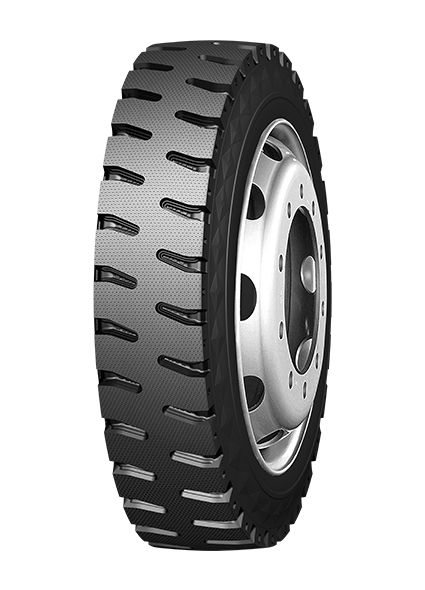
Mining tire durability is affected by several interconnected factors.
Mining trucks transport extremely heavy payloads. Tire loading therefore has a direct impact on heat generation, casing stress, and tread wear.
If a tire regularly operates above its designed load capacity, several problems may occur:
Excessive heat buildup
Sidewall deformation
Faster tread wear
Casing fatigue
Belt separation
Reduced tire life
Higher risk of sudden tire failure
Selecting tires according to actual axle loads is therefore essential.
Mining operators should consider both the nominal truck capacity and the real operating payload.
Correct inflation pressure is one of the most important factors affecting mining truck tire life.
Underinflated tires flex excessively during operation.
This generates additional heat and increases stress on the casing.
Possible consequences include:
Sidewall cracking
Shoulder wear
Increased rolling resistance
Higher fuel consumption
Casing damage
Overinflation can also reduce tire durability.
It may cause:
Excessive center tread wear
Reduced impact absorption
Lower contact area
Increased vulnerability to cuts and punctures
For mining fleets, tire pressure should be checked regularly according to the tire manufacturer's recommendations and actual operating conditions.
Haul road quality has a major influence on tire wear.
Common road-related hazards include:
Sharp rocks
Loose stones
Potholes
Deep ruts
Uneven road surfaces
Excessive gradients
Standing water
Poor drainage
Sharp rocks may cut the tread or sidewall, while potholes can generate severe impact forces.
Regular haul road maintenance can therefore provide substantial tire cost savings.
Grading roads, removing sharp debris, improving drainage, and repairing damaged sections can extend tire life across the entire fleet.
Mining truck tires generate heat as they rotate under load.
Higher speeds increase heat generation.
When trucks repeatedly operate above recommended speed limits, excessive internal temperatures may damage the tire structure.
Potential problems include:
Tread separation
Belt damage
Accelerated rubber degradation
Casing fatigue
Mining operators must therefore balance productivity requirements with tire operating limits.
In many mining applications, speed and load are considered together using TKPH — Ton Kilometer Per Hour.
TKPH is an important parameter when selecting mining truck tires.
It considers both:
Load × Speed
A simplified concept is:
TKPH = Average Tire Load × Average Operating Speed
If the actual operating TKPH continuously exceeds the tire's rated capability, excessive heat can accumulate inside the tire.
This can significantly shorten tire life.
Therefore, mining companies should match tire TKPH ratings with actual haul cycles before purchasing tires.
Important factors include:
Loaded truck weight
Empty truck weight
Haul distance
Average speed
Cycle time
Ambient temperature
Mining operations can take place in deserts, tropical regions, high-altitude areas, and extremely cold environments.
Temperature affects tire durability because rubber characteristics and internal tire temperatures change with operating conditions.
High ambient temperatures can increase heat buildup inside the tire.
This is especially important when trucks operate:
At high speeds
Under heavy loads
On long haul routes
During continuous shifts
Tire compounds designed for heat resistance may therefore be preferable for high-temperature mining environments.
Mining truck tire manufacturers use different rubber compounds depending on operating conditions.
There is usually a trade-off between:
Wear resistance
and
Heat resistance.
Harder compounds may provide better abrasion resistance but may not always be suitable for high-speed, heat-intensive applications.
Heat-resistant compounds may perform better on long haul cycles.
Cut-resistant compounds may be preferable in rocky mines.
Selecting the appropriate compound can significantly improve tire durability.
Tread design also affects mining tire performance.
Different tread patterns are designed for different operating environments.
Block patterns offer strong traction and are frequently used in challenging mining conditions.
They may perform well on:
Loose surfaces
Uneven roads
Soft ground
Moderate rocky terrain
Rib-type patterns can provide stable directional control and relatively low rolling resistance.
They may be suitable for:
Well-maintained haul roads
Higher-speed transportation
Longer haul distances
Deep tread designs provide additional wearable rubber.
They may increase service life in highly abrasive environments.
However, deeper tread can generate more heat.
Therefore, deep tread is not automatically the best choice for every operation.
The tire must be matched to the actual haul cycle.
Many mining tires are removed from service before reaching their theoretical tread life.
Common causes include the following.
Sharp rocks can penetrate the tread or sidewall.
Large cuts may expose structural components and make the tire unsafe for continued operation.
Heavy impacts caused by potholes, rocks, or road edges can damage the casing.
Impact damage may not always be visible immediately.
Internal structural damage can later develop into tire failure.
Excessive heat can weaken the bond between different tire components.
This may result in:
Tread separation
Belt separation
Internal structural failure
Uneven wear can result from:
Incorrect tire pressure
Suspension problems
Alignment problems
Different tire diameters
Poor rotation practices
Correcting these problems early can improve total tire life.
Mining companies can significantly improve tire durability through proper operational management.
Pressure should be checked routinely.
For large mining fleets, tire pressure monitoring systems can help operators identify pressure abnormalities before serious damage occurs.
Repeated overloading should be avoided.
Payload monitoring systems can help ensure trucks remain within recommended operating limits.
Mine road maintenance should be viewed as part of tire management.
Important actions include:
Removing sharp rocks
Repairing potholes
Maintaining road surfaces
Improving drainage
Controlling road gradients
Reducing excessive curves
Better roads can reduce both tire damage and fuel consumption.
Temperature monitoring is particularly important in high-speed or high-load operations.
If tire temperatures repeatedly exceed recommended limits, operators may need to adjust:
Truck speed
Payload
Haul cycle
Tire specification
Tire positions experience different loads and wear patterns.
A planned rotation strategy can help achieve more uniform wear and maximize casing utilization.
Daily and scheduled inspections should identify:
Cuts
Cracks
Bulges
Abnormal wear
Embedded rocks
Sidewall damage
Tread separation
Pressure abnormalities
Early detection allows maintenance teams to repair or remove damaged tires before more serious failures occur.
The lowest-priced mining tire is not necessarily the most economical choice.
Suppose:
Tire A costs $8,000 and lasts 4,000 operating hours.
Cost per hour:
$8,000 ÷ 4,000 = $2.00/hour
Meanwhile:
Tire B costs $9,500 and lasts 5,500 operating hours.
Cost per hour:
$9,500 ÷ 5,500 ≈ $1.73/hour
Although Tire B has a higher initial purchase price, its operating cost is lower.
For this reason, mining companies should evaluate tires based on:
Initial cost
Expected operating hours
Retread potential
Casing durability
Failure rate
Maintenance requirements
Downtime risk
The goal is not necessarily to buy the cheapest tire, but to achieve the lowest total cost per transported ton.
Tire construction also affects durability.
Radial tires generally provide:
Lower rolling resistance
Better heat dissipation
More flexible sidewalls
Stable ground contact
Potentially longer tread life
They are commonly used on many modern mining haul trucks.
Bias tires have overlapping casing plies.
They may offer:
Strong sidewall construction
Good resistance to certain impact conditions
Suitability for some lower-speed applications
The best construction depends on vehicle design and operating environment.
In some applications, mining tire casings can be retreaded if they remain structurally sound.
Retreading can reduce tire cost by reusing the casing and replacing the worn tread.
However, not every mining tire is suitable for retreading.
The casing should be inspected carefully for:
Belt damage
Sidewall cuts
Heat damage
Structural deformation
Excessive repairs
Casing quality therefore plays an important role in the total economic value of a mining tire.
Before placing a bulk mining tire order, procurement teams should discuss actual operating conditions with the tire supplier.
Important information includes:
| Purchasing Factor | Questions to Consider |
|---|---|
| Truck model | Which trucks will use the tires? |
| Tire size | What tire dimensions are required? |
| Payload | What is the normal and maximum payload? |
| Road surface | Is the route rocky, abrasive, muddy, or paved? |
| Haul distance | How long is each haul cycle? |
| Operating speed | What is the average and maximum speed? |
| Temperature | What are the typical ambient temperatures? |
| TKPH | What TKPH rating is required? |
| Tread pattern | Which tread design suits the terrain? |
| Compound | Is heat, wear, or cut resistance more important? |
| Operating hours | How many hours do trucks operate daily? |
| Maintenance | What pressure and tire monitoring systems are used? |
Providing this information allows suppliers to recommend tires more accurately.
For fleet operators and distributors, tire durability depends not only on product design but also on supplier capability.
Consider whether the supplier can provide:
Technical data should clearly identify:
Tire size
Load index
Speed capability
Ply rating
Tread depth
Overall diameter
Section width
Recommended rim
Inflation pressure
TKPH rating
Professional suppliers should recommend tires according to mine conditions rather than simply quoting available sizes.
For large mining fleets, consistent casing quality and compound performance are essential.
Variation between production batches can make tire performance difficult to manage.
Technical support may include:
Tire selection
Pressure recommendations
Wear analysis
Failure analysis
Application optimization
These services can help mines improve tire utilization.
Mining tire lifespan varies substantially depending on truck loading, road conditions, speed, tire specification, compound, maintenance, and operating temperature. For this reason, mines normally measure tire life using operating hours, kilometers, or total cost per ton rather than a fixed calendar lifespan.
Common causes include excessive payload, incorrect tire pressure, abrasive haul roads, sharp rocks, high operating speeds, excessive heat, poor alignment, and incorrect tire selection.
Maintain correct inflation pressure, control payload, improve haul roads, monitor temperature, select the correct compound and tread pattern, rotate tires when appropriate, and perform regular inspections.
TKPH helps determine whether a tire can handle the combination of load and operating speed in a mining haul cycle. Using a tire below the required TKPH capacity can lead to excessive heat buildup and premature failure.
No. Deep tread may provide more wearable rubber and better protection in abrasive conditions, but it can also generate additional heat. The correct tread depth should match the mine's operating conditions.
Rocky environments generally require tires with strong casing construction, appropriate tread depth, and cut-resistant compounds. The final selection should also consider payload, speed, haul distance, and temperature.
The lifespan and durability of mining truck tires depend on far more than tread depth alone.
Load, speed, TKPH, road quality, inflation pressure, ambient temperature, tire compound, tread pattern, and maintenance practices all influence the final service life.
For mining companies, the most effective strategy is therefore to treat tires as part of the entire haulage system.
Proper tire selection combined with disciplined pressure management, payload control, haul-road maintenance, and regular inspections can reduce premature failures, increase tire operating hours, minimize truck downtime, and lower overall haulage costs.
When purchasing mining truck tires for a fleet, focus not only on the tire price but also on durability, application compatibility, casing quality, technical specifications, and total cost per operating hour.